Crafting a social media strategy involves brainstorming a combination of overall vision for your small business, your strengths, and immediate goals. Whether you’re working with a social media consultant like Take Flight or developing a strategy on your own, you need to take a variety of factors into consideration when building your plan. Once you begin implementing your plan, another facet of social media comes into play: key performance indicators. We’re sharing a little about understanding KPIs, how to measure them, and why they look different for every client or campaign.
Understanding what KPIs mean for small businesses
Key performance indicators, or KPIs, might not seem fun when you start working with them. As the name states, KPIs measure how something is performing. To analyze social media performance, you need to look at metrics for different areas, and looking at numbers isn’t always at the top of a priority list when you’re running a business. However, looking at KPIs with an objective eye is the only true way to measure the effectiveness of your social media strategy — and how to adjust your strategy as you move forward.
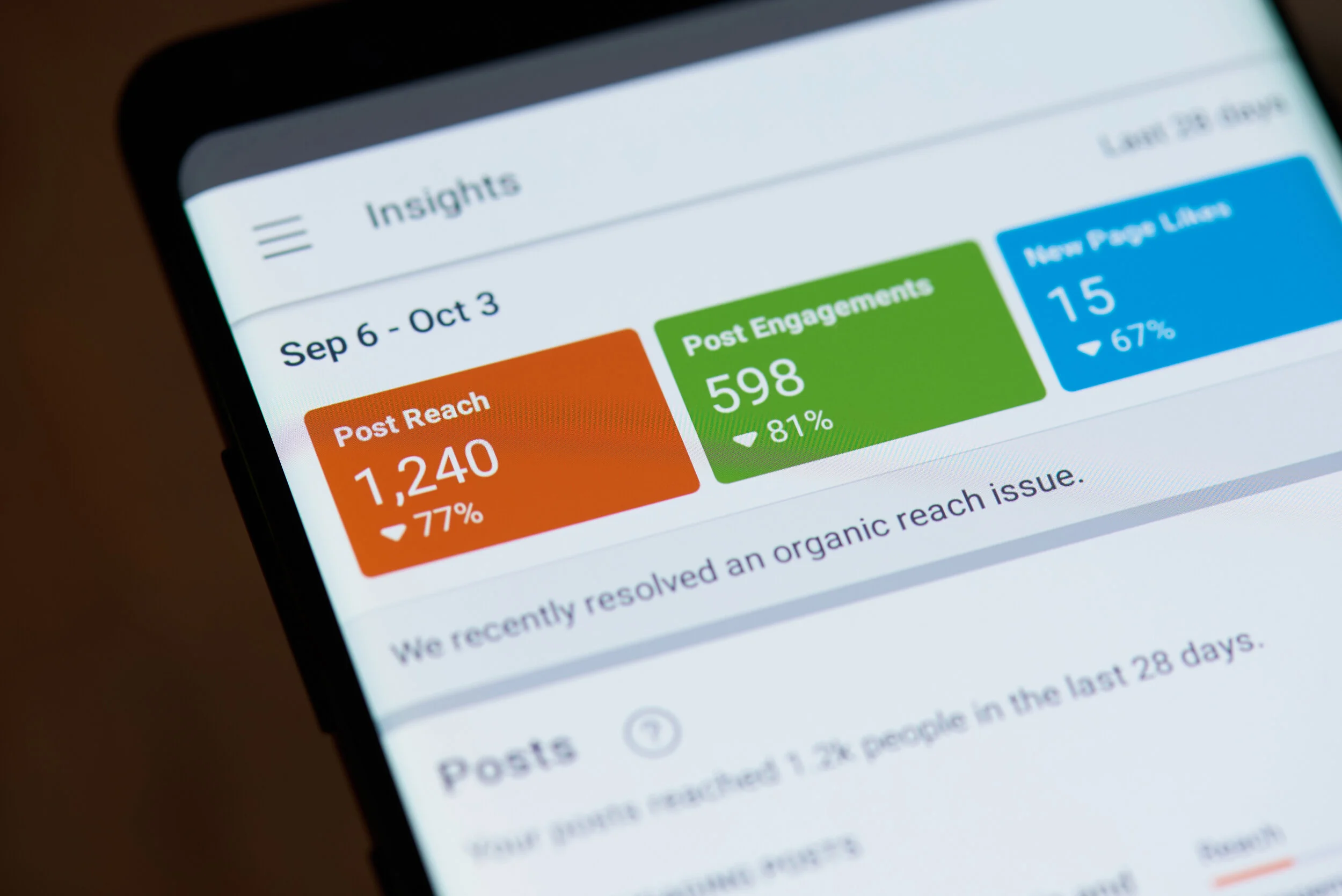
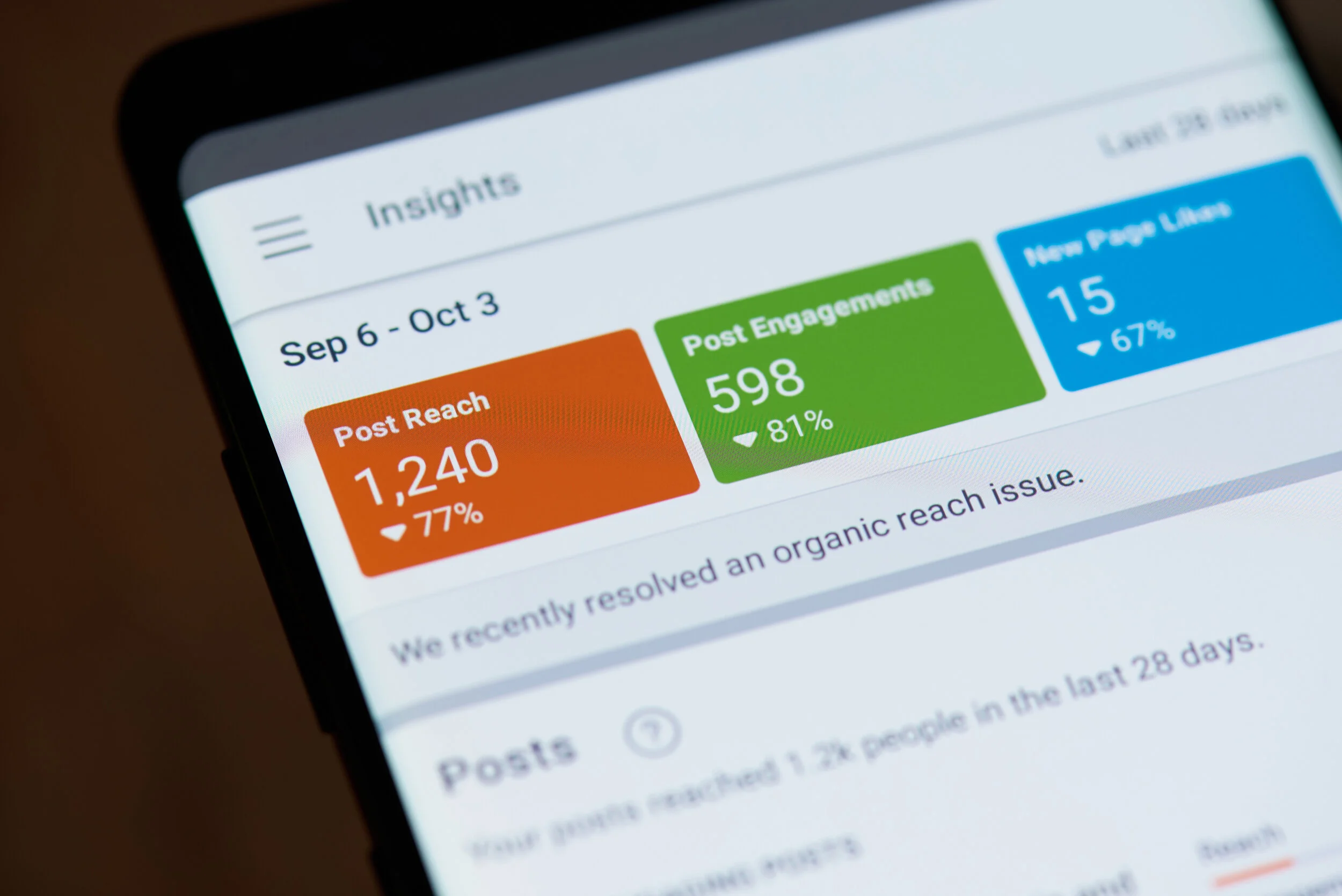
Social media platforms, including Twitter, Facebook, and Instagram, offer metrics information you can use to track your KPIs. Look for sections of your social media dashboard with words like “analytics” or “insights.” For a larger picture overview, you can use dedicated social media software like Sprout Social to track all of your metrics in one place. Keep in mind that social media software comes in all shapes, sizes, and costs. Before committing to a particular package, many allow you a free trial period. You may have to try a few before finding one that works for you.
What social media KPIs matter most to small businesses and brands?
Engagement — Engagement remains a major buzzword in the social media conversation, in part because it matters when looking at post performance and algorithm placement and in part because engagement numbers can help brands looking to collaborate with larger campaigns. Engagement metrics include individual actions like retweets, shares, and comments, which are easily measured. Engagement rate matters, too, because it can give you a better idea of what clicks with your audience and what doesn’t. The rate is measured by looking at the number of individual actions divided by the impressions or reach, which we’ll talk about more later.
Impressions — Impressions are an import KPI for brands looking to build visibility. This particular metric measures how frequently your content appears in your followers’ feeds.
Reach — Like impressions, reach helps you track awareness of your business. Reach measures the step beyond impressions, taking into account the amount of people that see your post through both unique impressions and post shares. Reach matters, because it gets your content in front of people that don’t necessarily follow you or interact with you on social media. Reach can help small businesses grow, especially if their content is shared by followers with a large social media presence.
Response rate — If your business deals directly with customers, response rate might be an important KPI to measure. Response rate or response time measures how long it takes someone at your social media helm to respond to messages. Though responding thoroughly matters more than shooting off an immediate response to either positive or negative messages, a quick response rate indicates a business cares about the customers it serves.
Conversions — Conversion rate is often a top priority for businesses using e-commerce platforms or websites with a sales component. Conversions track traffic, so you know where people are coming from when they make a purchase from your business.
Share of voice — Often associated with public relations, this metric measures how much of the “conversation” your business is participating in. It measures how often your brand is mentioned in comparison to similar businesses or brands.
Understand which KPIs matter to your social media strategy
You’re not alone if the idea of parsing numbers feels like a lot of work on top of what you’re already balancing each day. One of the things we emphasize with our clients is that not all KPIs are created equally when it comes to individualized social media strategies. That’s where a specific social media plan comes into play.
Depending on your goals, different KPIs matter more than others. If you’ve already established a local presence and want to expand your online visibility, you might look at impressions and reach. If your engagement numbers are high but sales are stagnant, looking at your conversion rate and where your conversions are coming from can help you focus a strategy instead of continuing to post in the same places with the same patterns.
Why a social media consultant can help maximize your KPI information
Investing in a social media consultant can feel like a unnecessary luxury for some small business owners. However, having someone on your team that works solely on social media can free your schedule — and mental load — to focus on the creative side of your business. Social media matters to brands and businesses, but we know it can feel overwhelming and all-consuming. The online world never sleeps, and it moves quickly.
Hiring someone to help you navigate what matters most to your current goals helps prioritize what you can handle yourself and what to delegate. Take Flight works with our clients to determine which KPIs best align with their current goals. We provide a monthly snapshot of key performance indicators and use that overview as a blueprint for future strategies. Building a brand means wearing many hats, but a strong team means you don’t have to wear all of them at the same time.
Contact Take Flight for information about a social media marketing analysis that will help you see what’s working and what isn’t with your social media plan.